Wine Country
Move through historic vineyards, old cellars, courtyard tastings and private tables where pisco, wine and desert agriculture set a generous, unhurried rhythm.
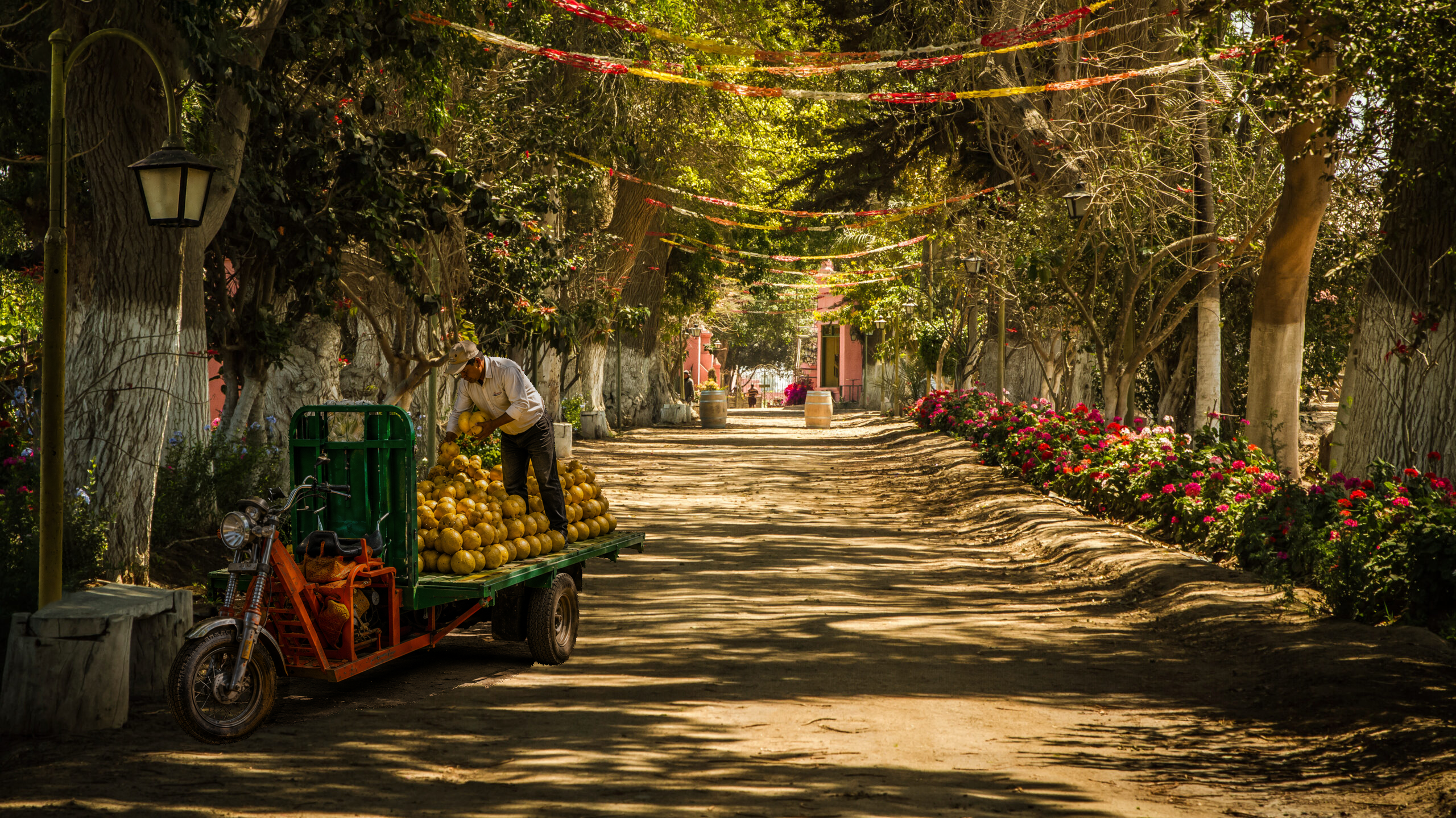
Where vineyards, desert roads, dune light and quietly cinematic valleys meet, Ica becomes one of Peru’s most layered coastal escapes: wine country, old estates, hidden canyons, palm legends, local tables and long golden afternoons shaped around the traveler’s pace.
Move through historic vineyards, old cellars, courtyard tastings and private tables where pisco, wine and desert agriculture set a generous, unhurried rhythm.
Balance the classic Ica landscape with palm groves, oasis edges, warm roads and quiet pauses, letting the day feel composed instead of collected.
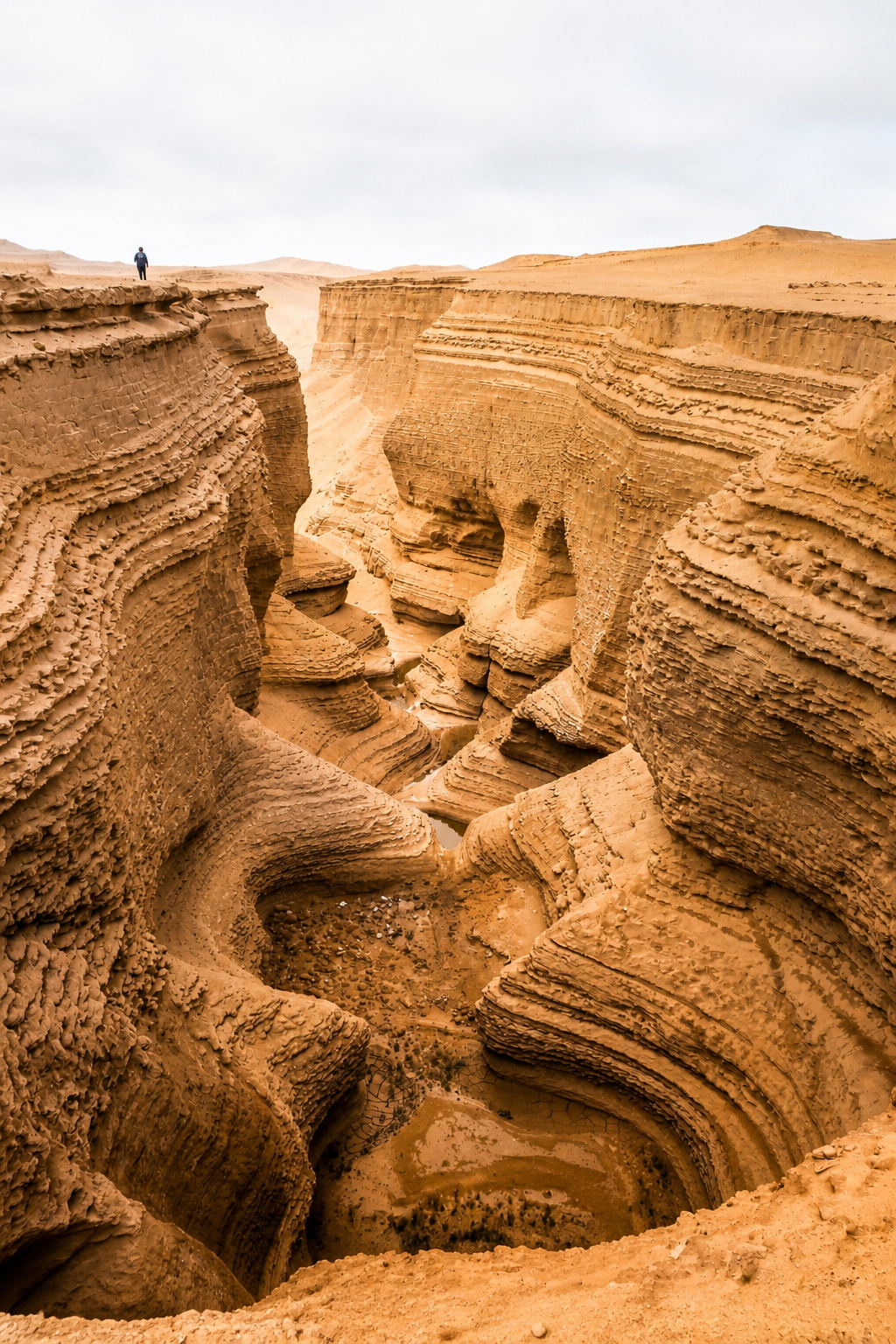
Slip farther into the desert for Cañon de los Perdidos, a raw canyon landscape best held as its own private chapter, timed for unrushed light.
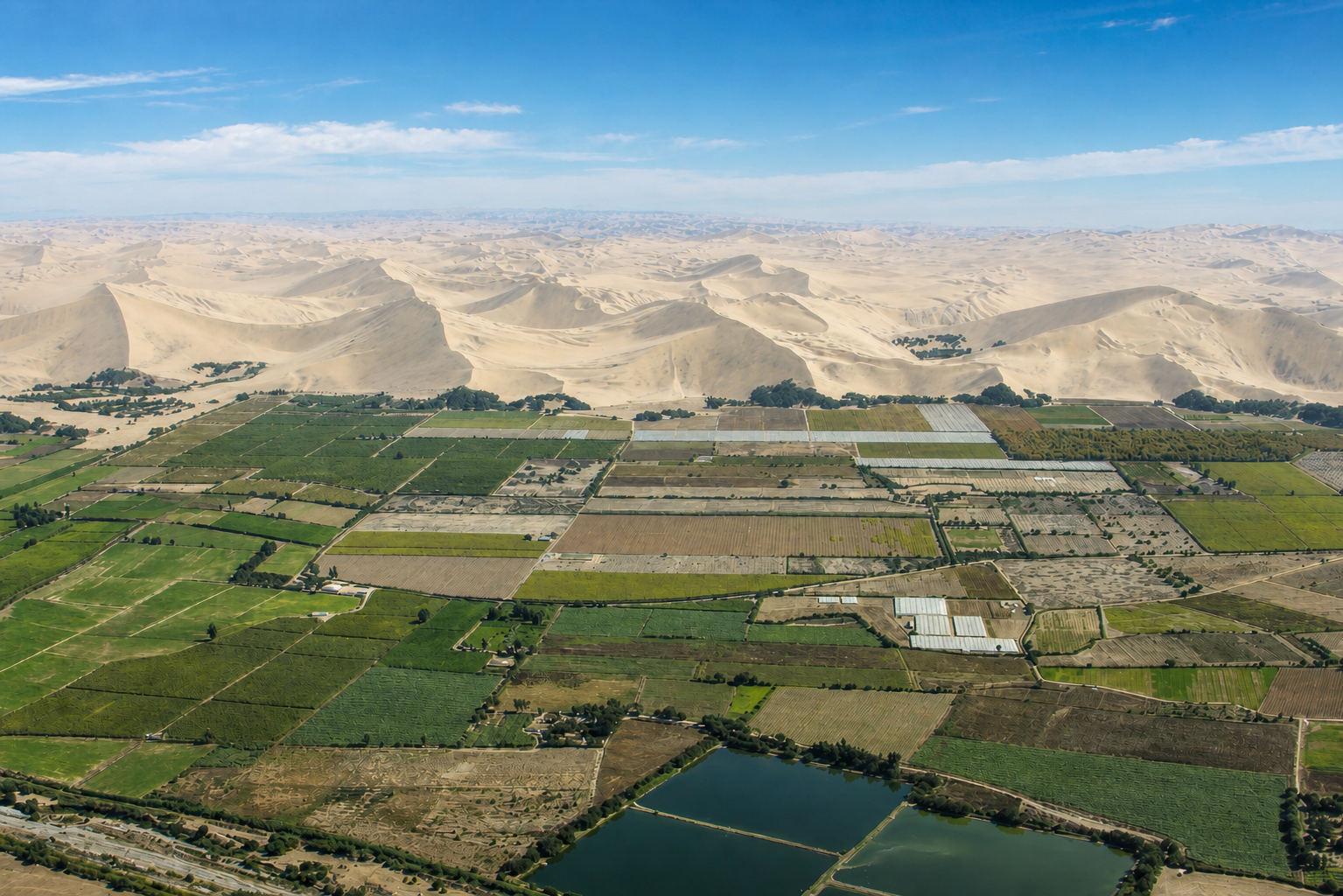
Ica’s fertile valleys are Peru’s fruit and veggie orchard, but the struggle against the encroaching desert is constant.
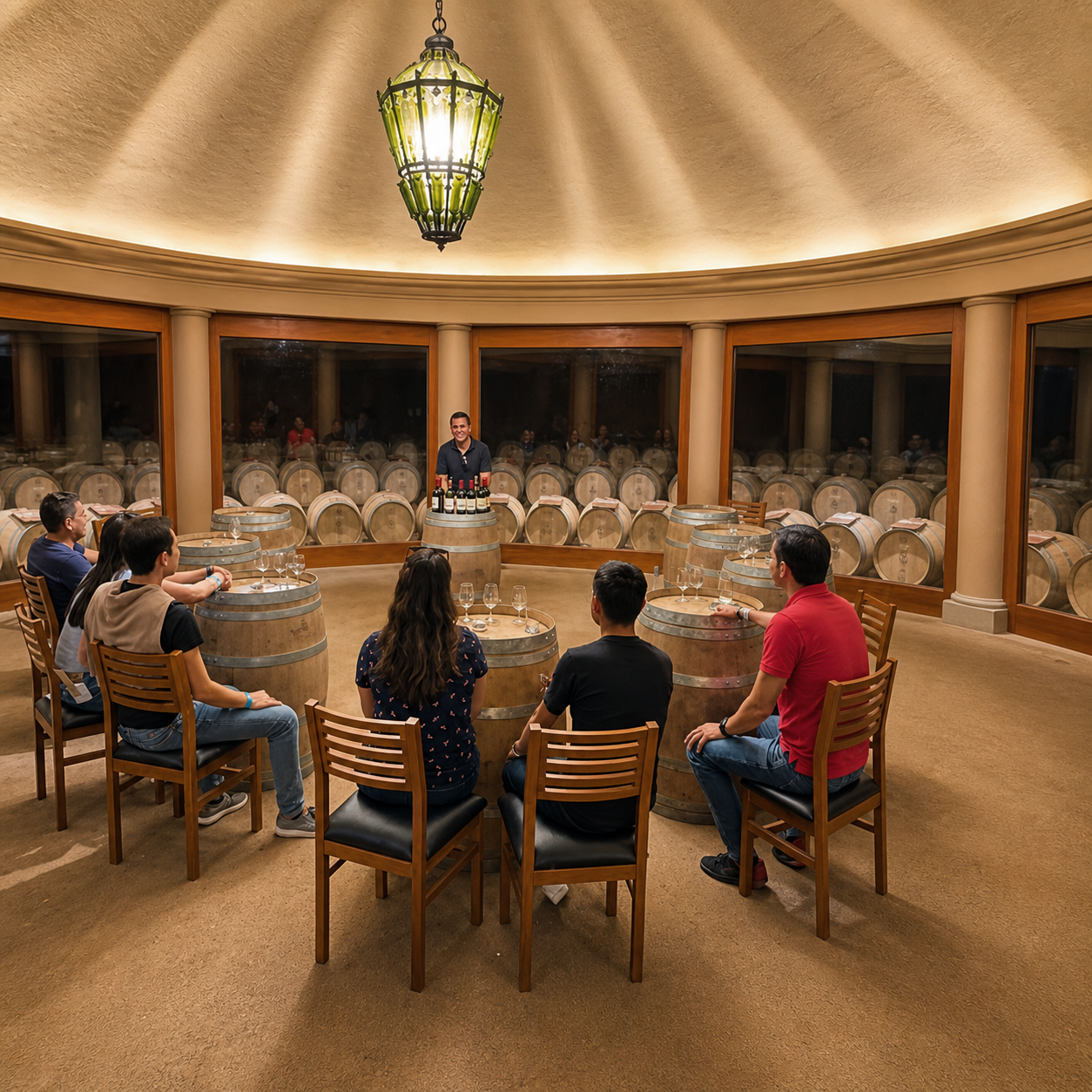
A private day in the valley is less about checking off stops and more about timing, texture and the pleasure of having space around you.
Begin with the vineyards, where desert light sits against old agricultural estates and the route can be shaped around cellars, tastings, photography or a long shaded lunch.
Then choose your pace: a scenic drive, a private tasting route, a guided look at the valley’s pisco traditions, or a softer afternoon that keeps the day expansive without feeling improvised.
Lunch can stay beautifully simple. Think cold drinks, bright local plates, pisco, wine, and a table chosen for shade, breeze and view rather than convenience. Ica rewards travelers who know when to stop moving.
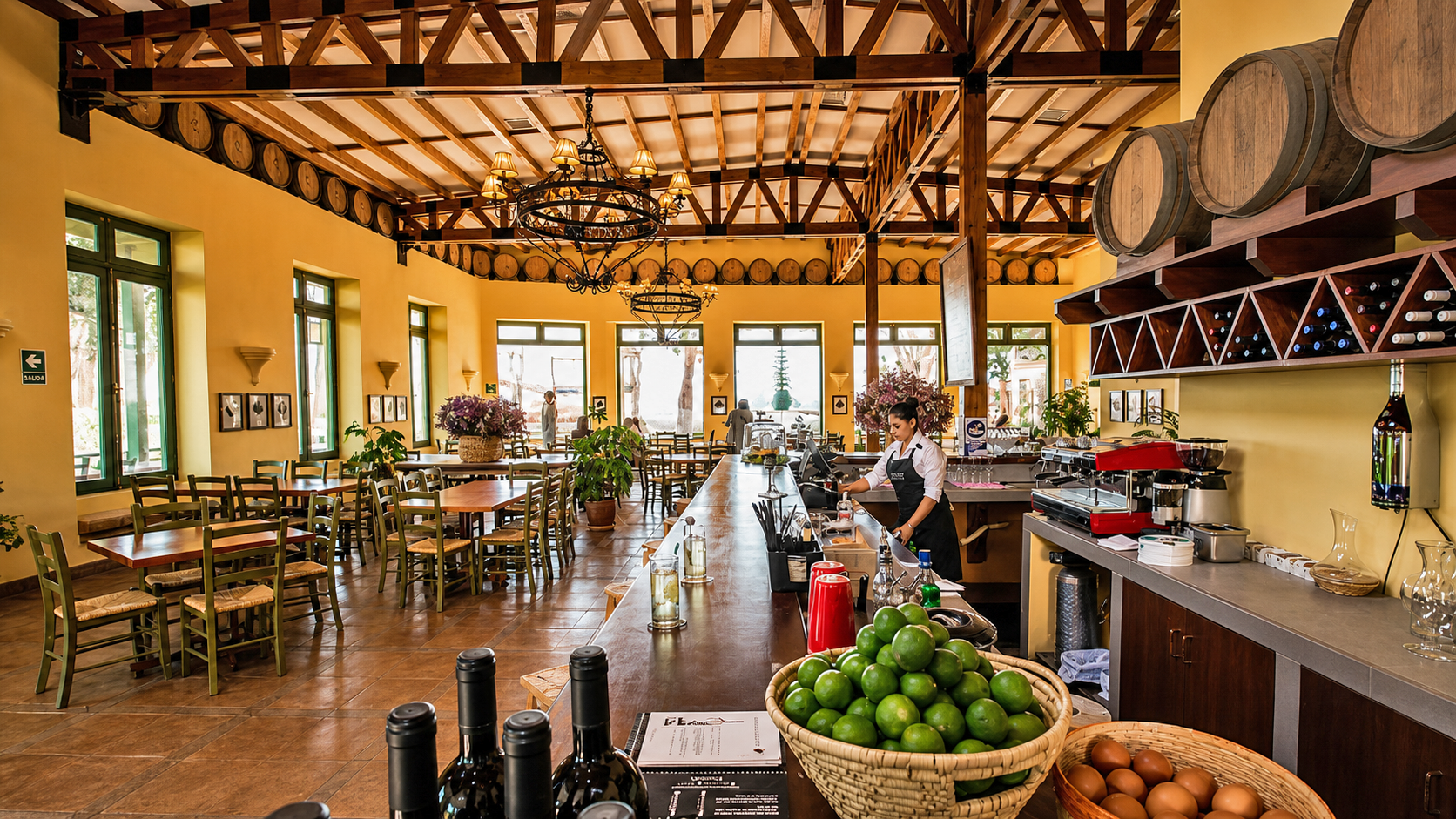
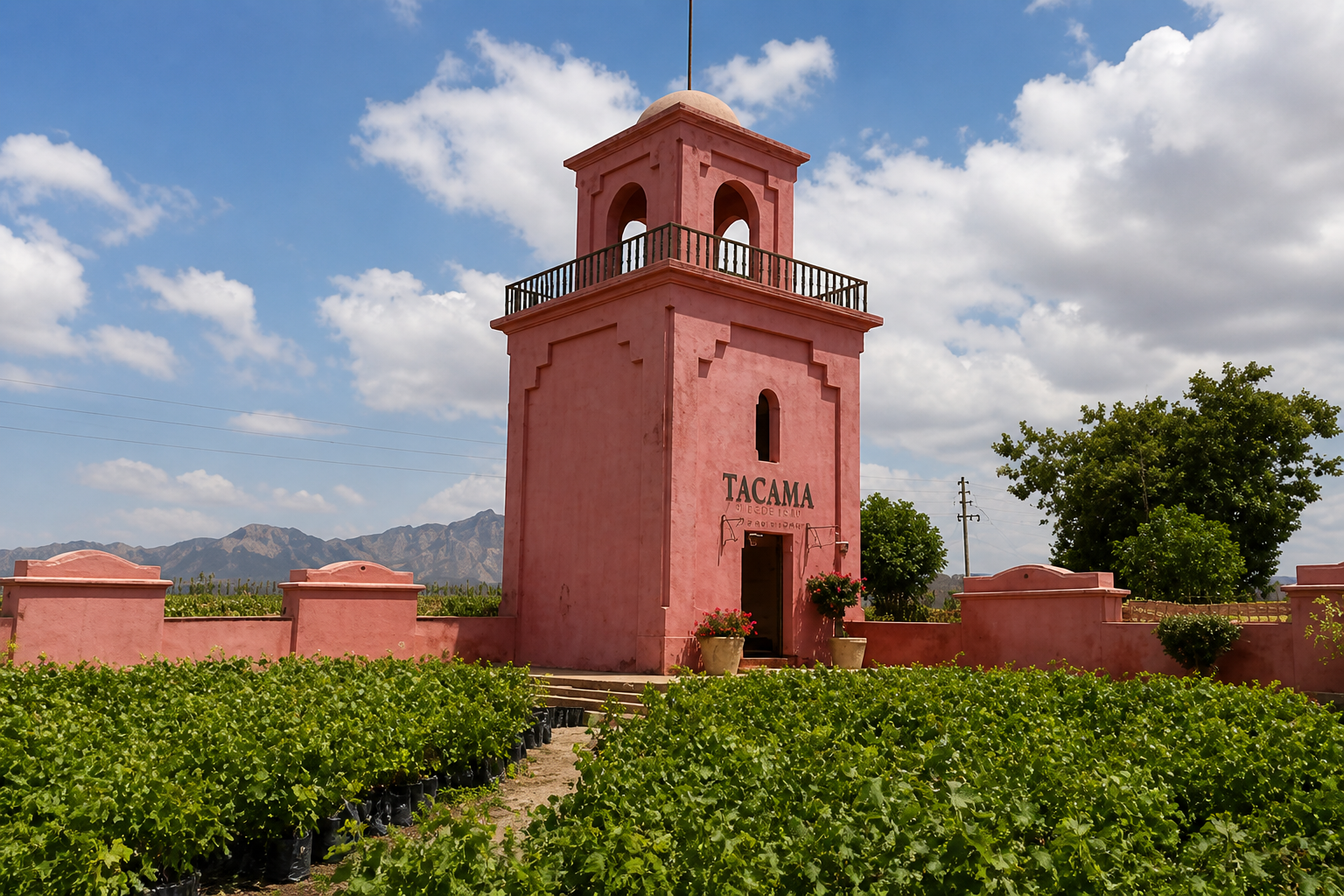
Tacama’s restaurant wears its winemaking heritage openly: oak barrels along the walls, wine racks zig-zag along the bar.

Keep the city material compact and useful: a cultural touchpoint, a pause, or a practical anchor between the valley and the dunes.
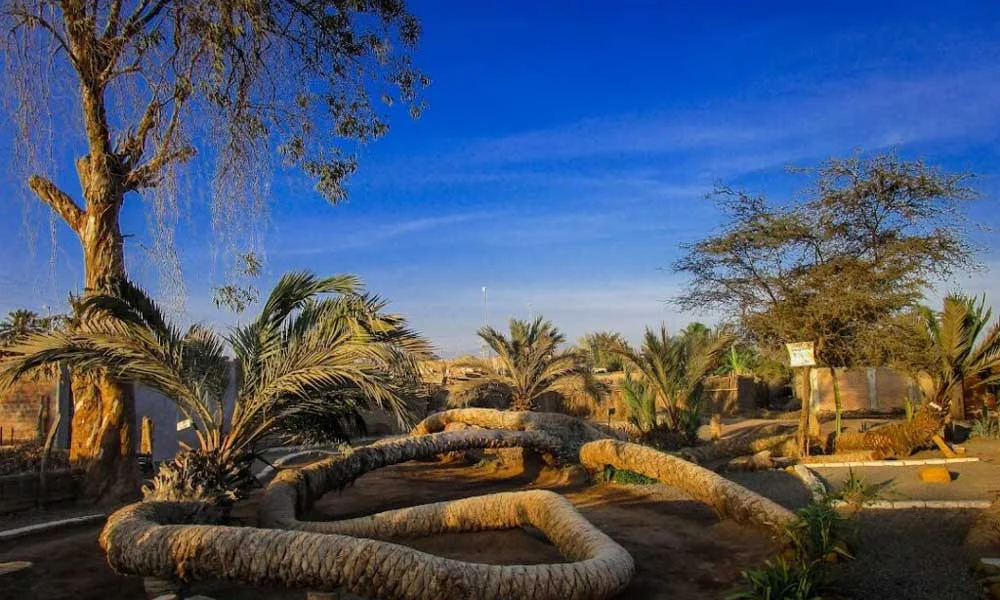
The Palmera de las Siete Cabezas can become a small folklore stop or a curious local texture inside the larger desert day.
Use this card for a secondary Ica note: something quick, scannable and useful once the final travel copy arrives.
A vertical visual beat for atmosphere, giving the lower page a little height variation without breaking the brochure rhythm.
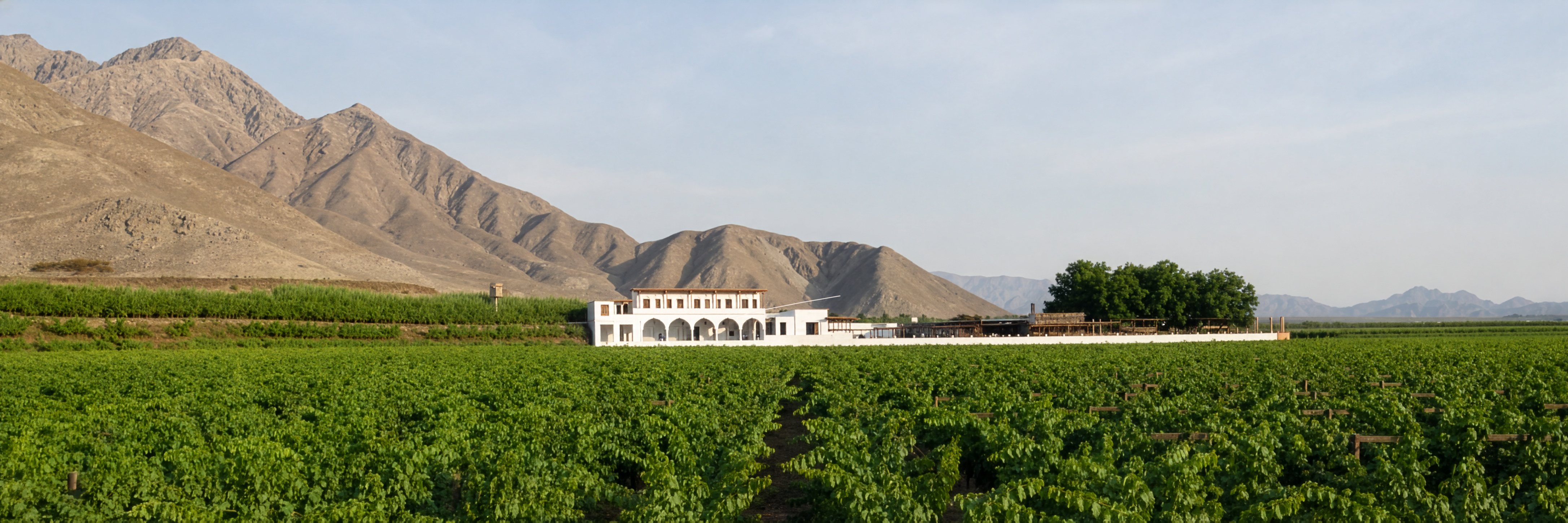
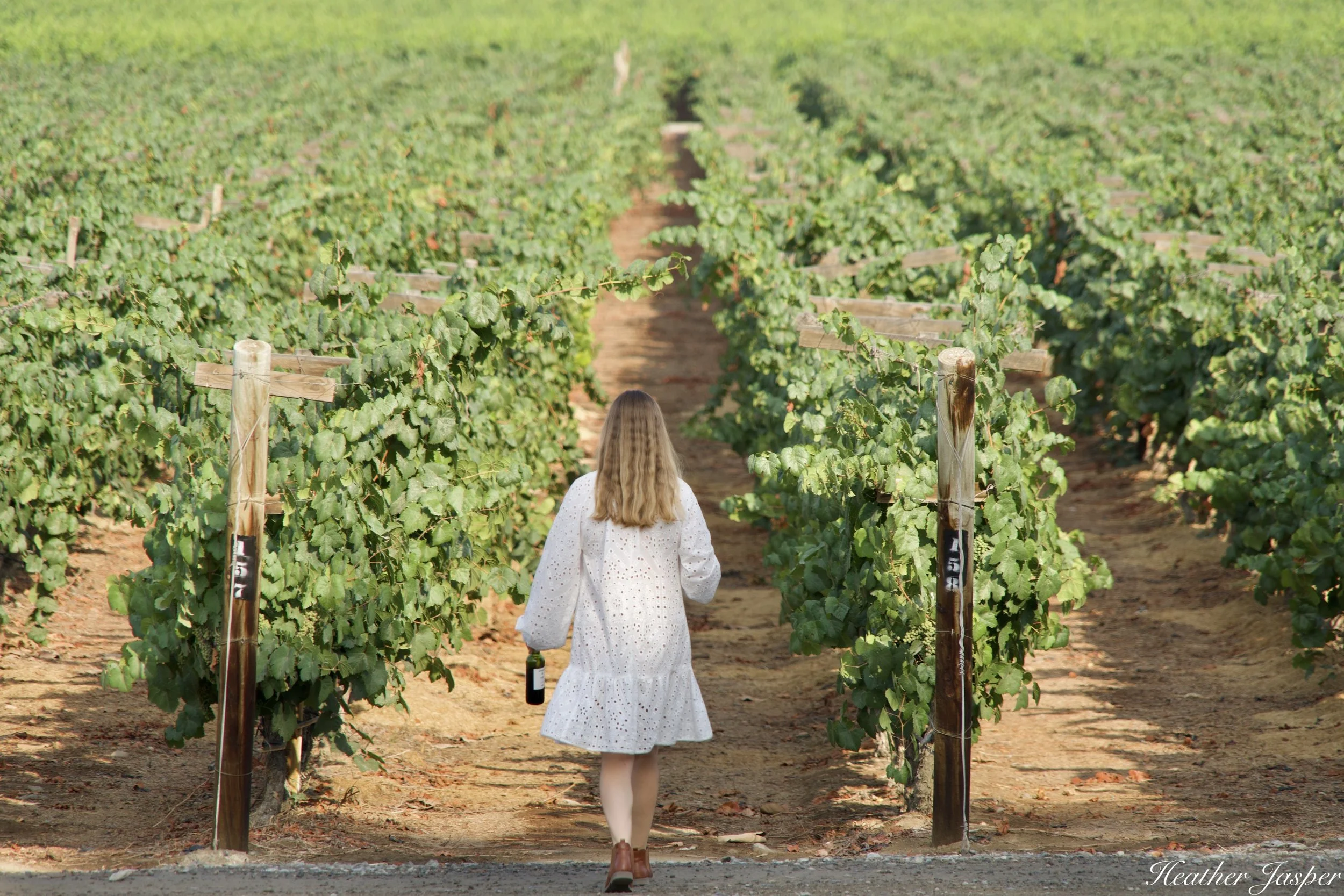
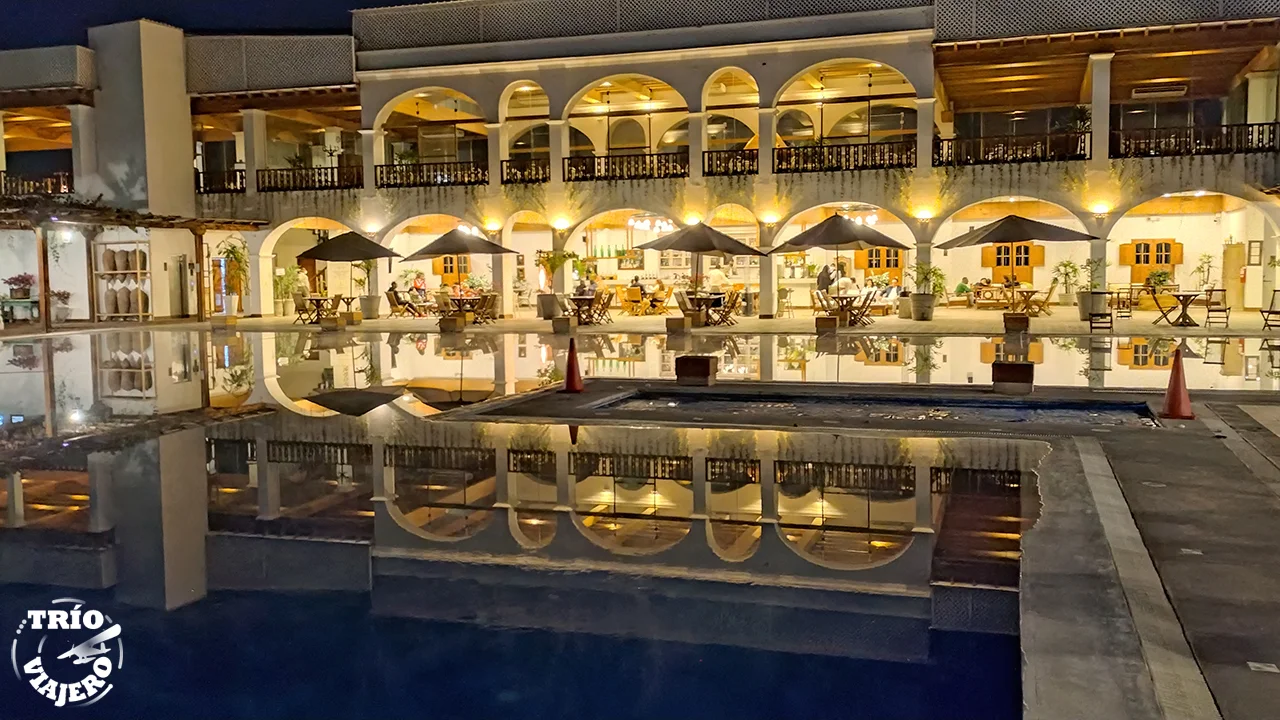

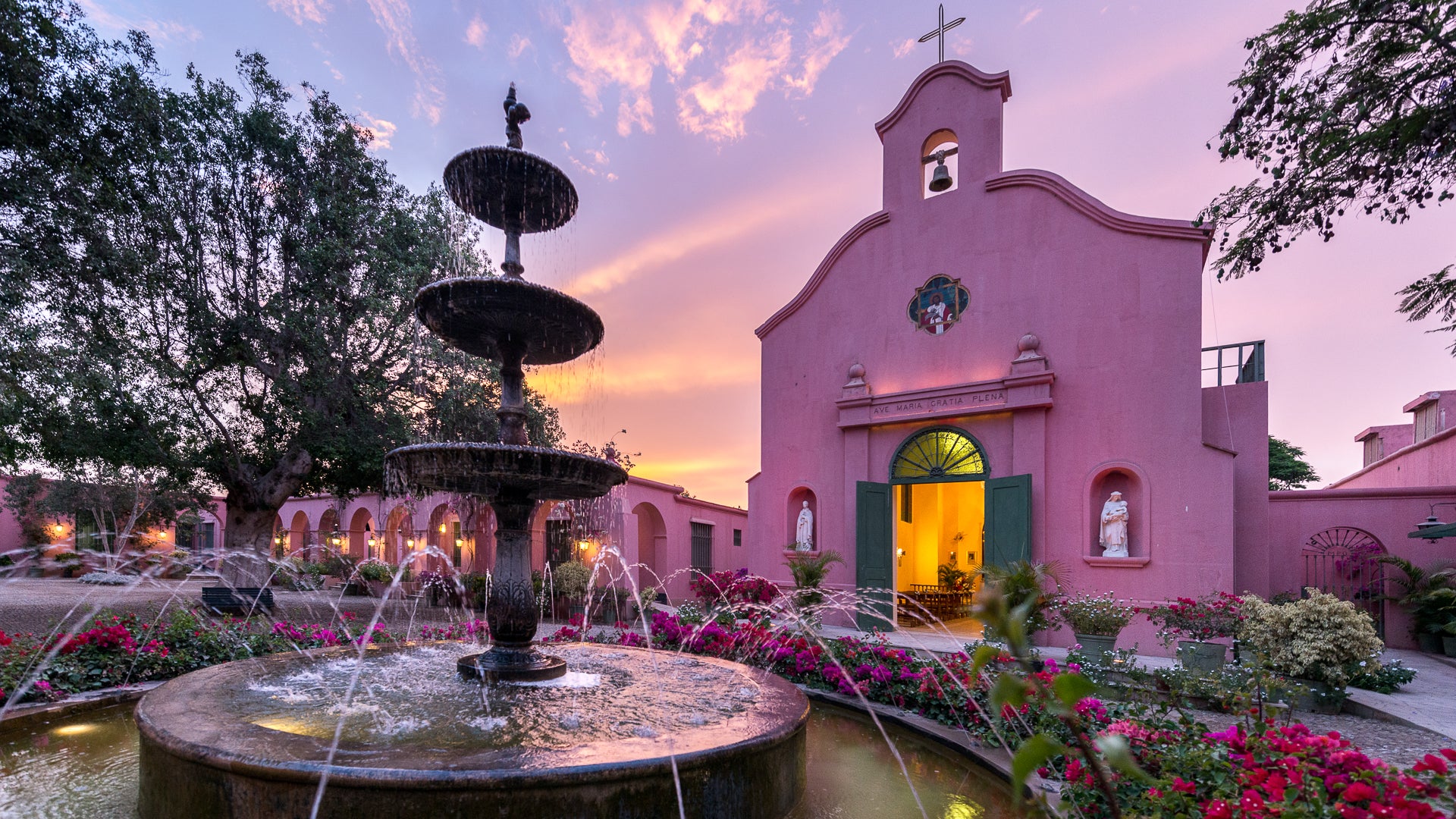
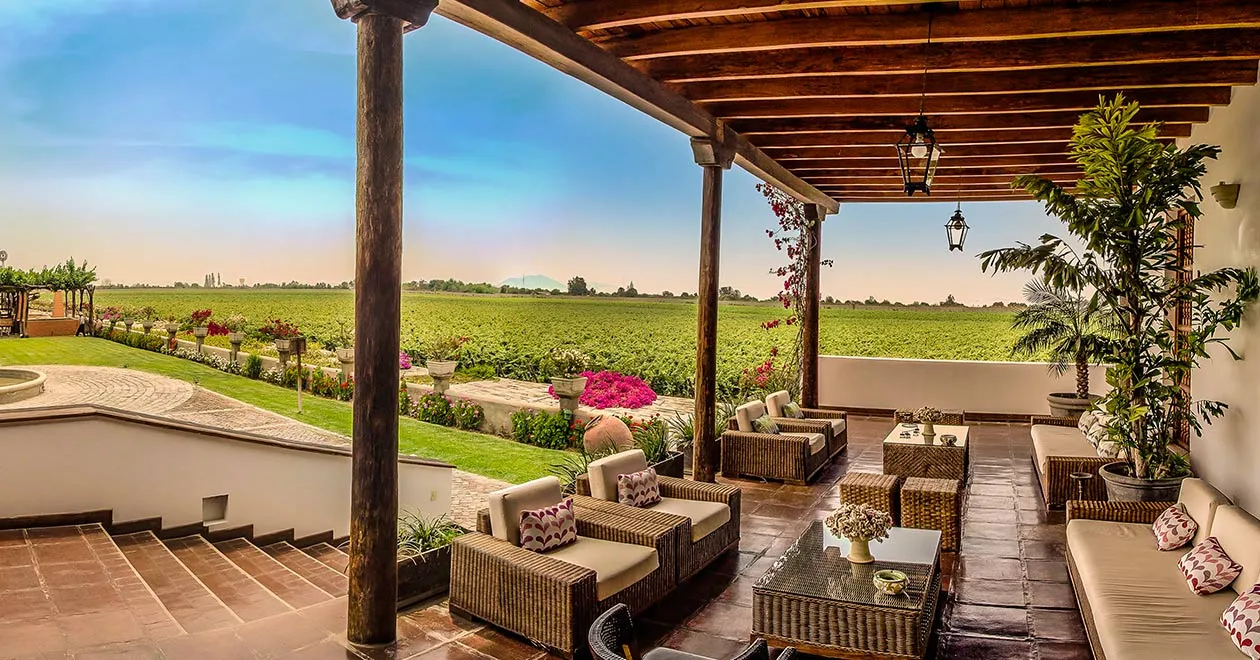
At Hotel Viñas Queirolo, the valley changes tempo. The property — part working winery, part boutique hotel — sits among a vast sea of vineyards on the outskirts of Ica, close enough to Huacachina for the dunes to stay within reach, yet quiet enough to let the day settle into wine-country time.
The setting is striking: endless rows of vines, republican arches, open gardens and an inviting pool.
Choose the rhythm of your day: perhaps a guided visit through the vineyards, a viewpoint overlooking Ica, a cata, lunch at El Intipalka, a bicycle ride through the estate, an afternoon swim, or a visit to the dunes before dinner.
Queirolo is not the right choice for travelers in a hurry. It needs room to breathe, but it rewards those who give it space.
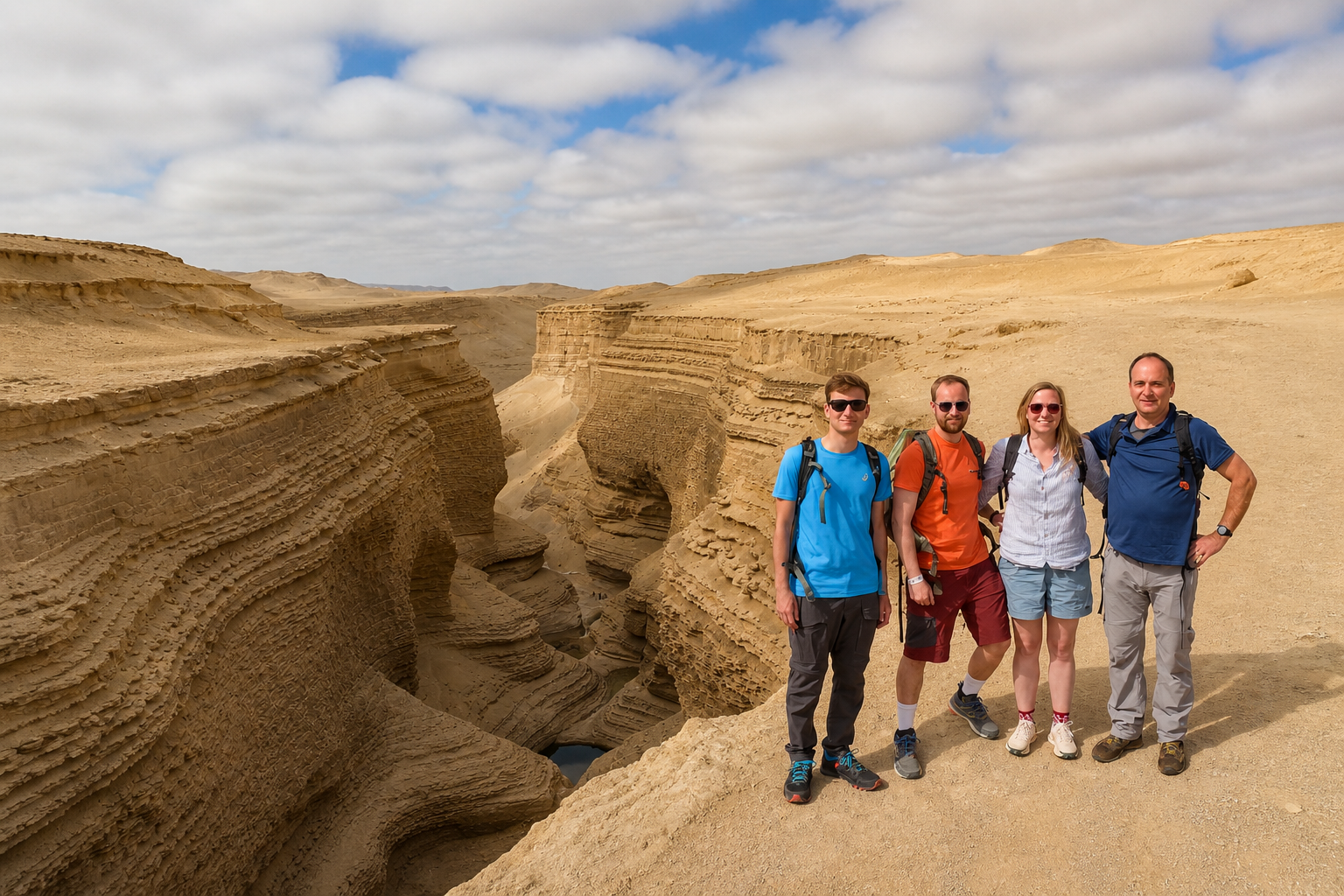
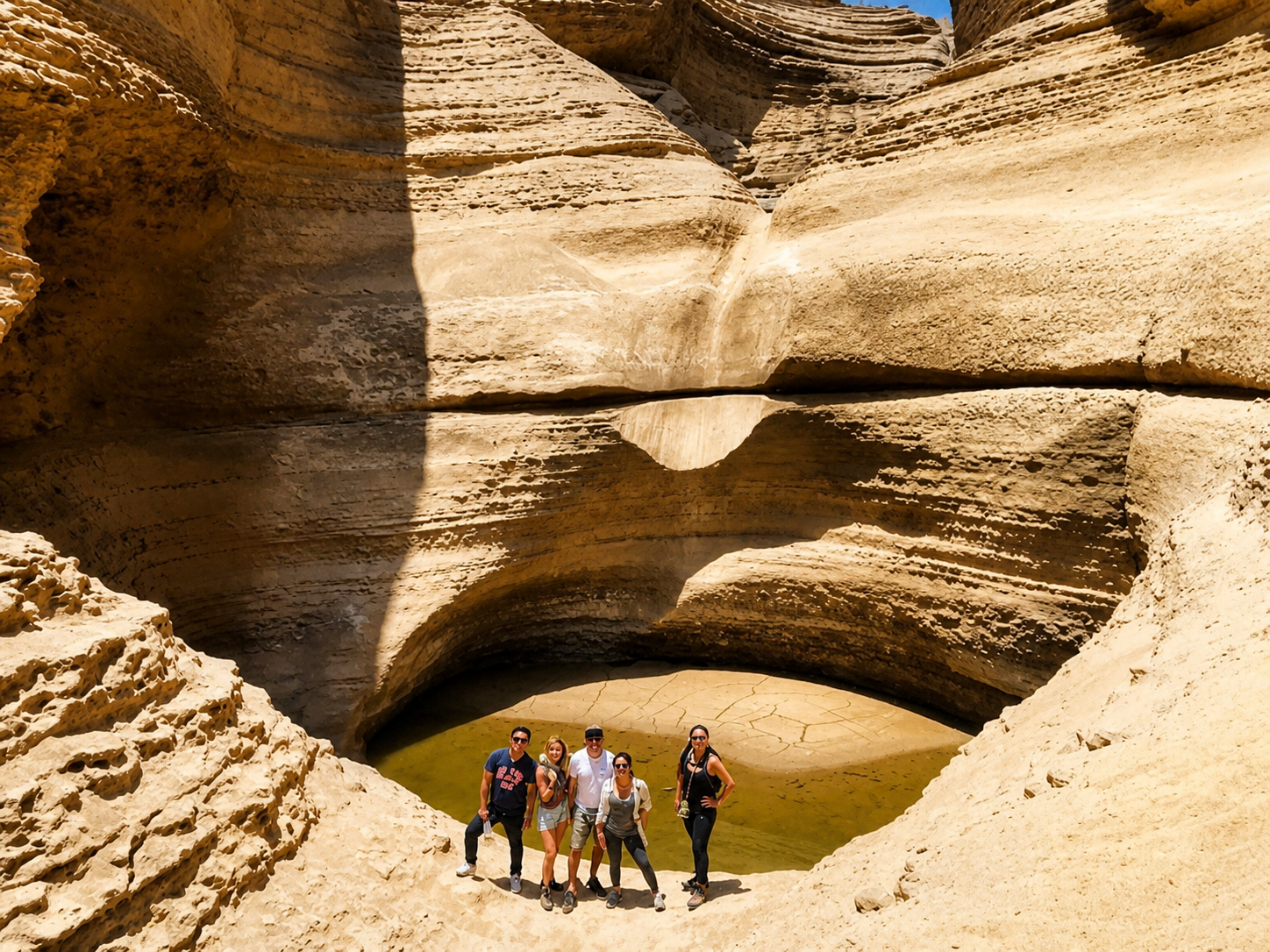
This is the rawer desert passage: farther out, more geological, and best treated as its own contained visual and editorial moment.
Begin with the desert road, where the landscape opens slowly and the point is not speed but arrival, space and the feeling of entering another register of Ica.
Then choose your pace: viewpoints, guided walking, quiet photography, or a tighter excursion that keeps the canyon powerful without making the day feel overbuilt.
The strongest version watches heat, light and timing carefully. This section can carry practical notes later while keeping the visual chapter intact.
Make Ica a private desert-and-vineyard chapter, not a rushed stop.
The strongest days here can combine winery estates, old cellars, Huacachina proximity, local restaurants, palm legends and the desert drama of Cañon de los Perdidos.
START THE ADVENTURE